
Today I am sharing some particularly encouraging news: the journal Biological Conservation has just published a manuscript that is the result of a major collective effort carried out within the European COST Action CA18201. Led by my colleague Amparo Lázaro (IMEDEA-CSIC), this work brought together specialists on threatened flora from across the Mediterranean arc and, because of its scale and diversity of approaches, would have been very difficult to accomplish without a collaborative network of this kind.
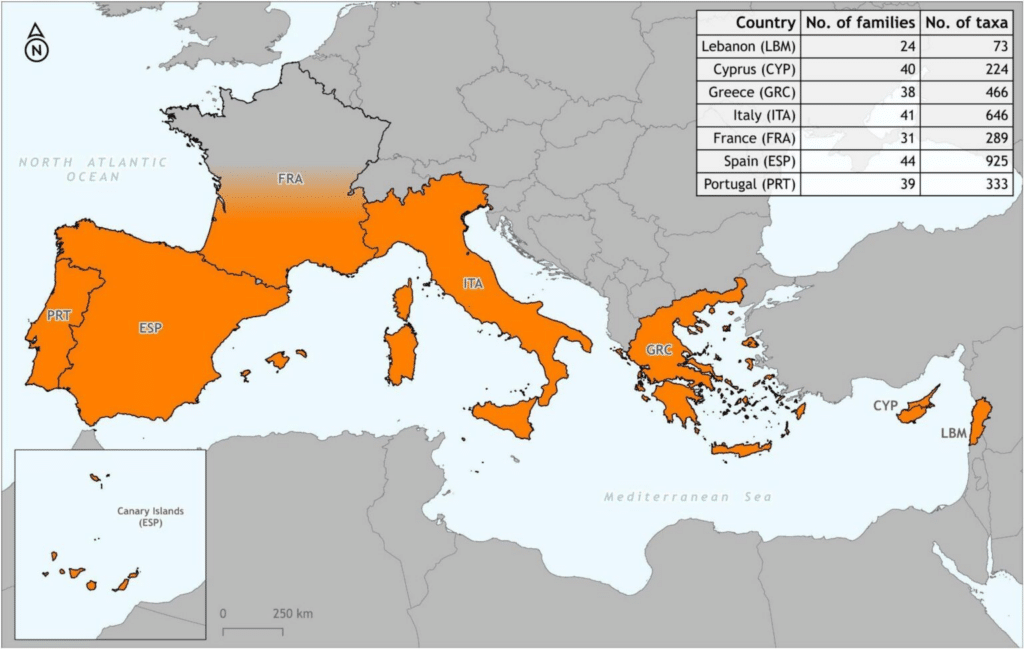
The study analyses nearly 3,000 records of threatened entomophilous plant species from seven Mediterranean countries and explores to what extent certain floral traits (such as flower shape, inflorescence type, flowering duration, among others) can help us understand why some species are particularly vulnerable. This is not merely an aesthetic issue: flower shape determines which pollinators can visit a plant and how efficiently they do so, and in a global context of pollinator decline this entails additional risks for more specialised plants.
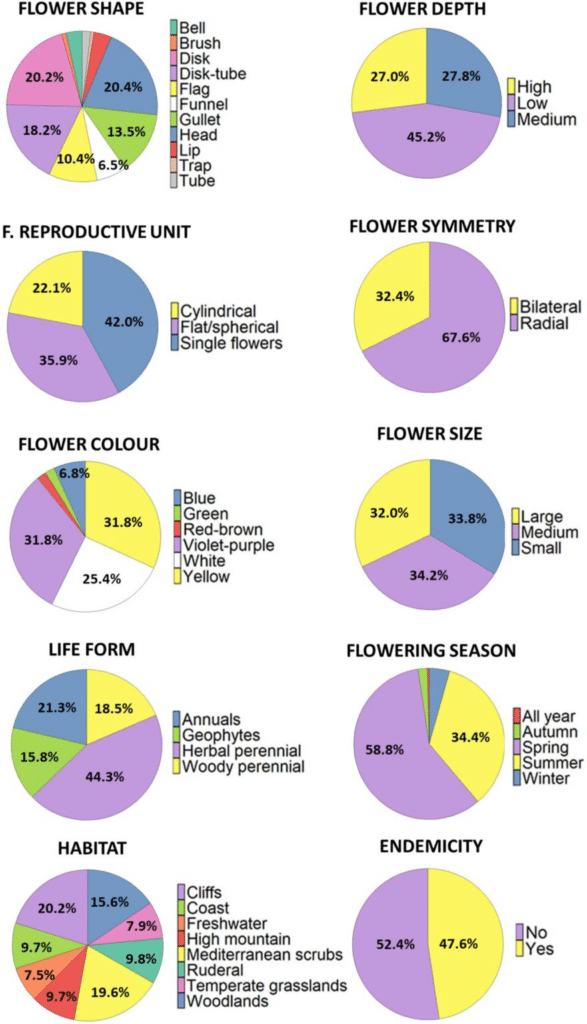
The results reveal clear patterns: species with flowers of complex morphology (labiates, papilionaceous flowers, orchids with a well-developed labellum…) or with inflorescences that are difficult for pollinators to handle tend to fall into higher threat categories. Flowering duration and habitat also play a role: coastal and freshwater environments harbour a particularly high proportion of taxa at risk.
Beyond the results themselves, which will undoubtedly help guide the assessment and prioritisation of taxa in data-poor regions, this paper also symbolises something we too often fail to highlight: the immense value of network-based research.
COST Action CA18201: a scientific ecosystem in its own right
COST Actions make something possible that is far from trivial: in this case, bringing botanists, ecologists, taxonomists, conservation scientists, some practitioners and analysts from across Europe to the same table. Each contributes their piece of local knowledge, their data series, diagnostic criteria and experience in interpreting very different floras. When these are combined, a continental-scale perspective emerges that would be impossible (or at least extremely difficult) to build from a single research group.
This Action, focused on threatened European flora, has shown what happens when teams working in ecologically similar contexts, yet historically fragmented by administrative, linguistic or institutional boundaries, are connected. The outcome is stronger, more robust and, above all, far more useful for those responsible for conservation decision-making.
Why this kind of collaboration matters
In addition to the published article, the collaborative experience leaves behind something equally valuable: a network of people who will continue working together in the future, a human infrastructure capable of responding to conservation challenges that no single country can address in isolation.
Mediterranean flora is diverse, fragile and often endemic. But it is also shared. And that means solutions must be shared as well.
This study is a good example of that.

