
There are certain things people simply cannot travel without. Some never leave home without a camera, others are inseparable from their binoculars, and some carry backpacks stuffed with folded maps. I have a different travel companion: a caliper. Yes, a caliper.
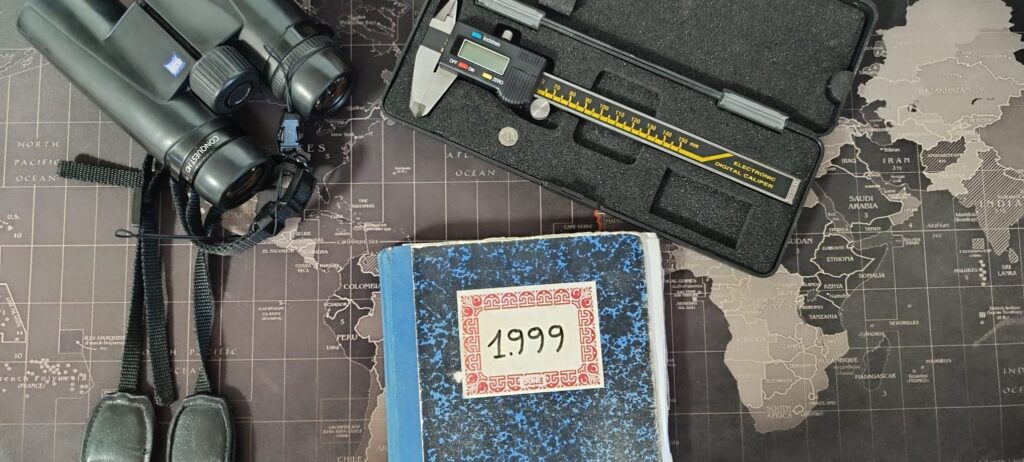
It may seem like an unusual tool for someone who travels the world eager to explore every corner of every place visited, but for many years it has been as much a part of my luggage as anything else. While others return home with souvenirs or postcards, I often come back with a field notebook full of numbers: lengths, diameters and measurements of flowers, fruits and seeds recorded along trails, in forests and, I should admit, thanks to the endless patience of those who travel with me.
And those small pieces of information, usually collected during moments of “free time” and seemingly insignificant compared to the major highlights of a journey, have often become part of something much larger.
I have recently contributed to a newly published scientific study involving more than 200 researchers working across much of the tropical world. The goal was to build a massive international database of tropical fruit and seed functional traits. Beyond the extraordinary collective effort involved, this first major global synthesis is already revealing something interesting: tropical fruits display large-scale functional patterns that have been difficult to detect until now. Having access to this information will help us better understand how plant communities are assembled, how plants interact with their seed dispersers, and how tropical ecosystems may respond to environmental change.
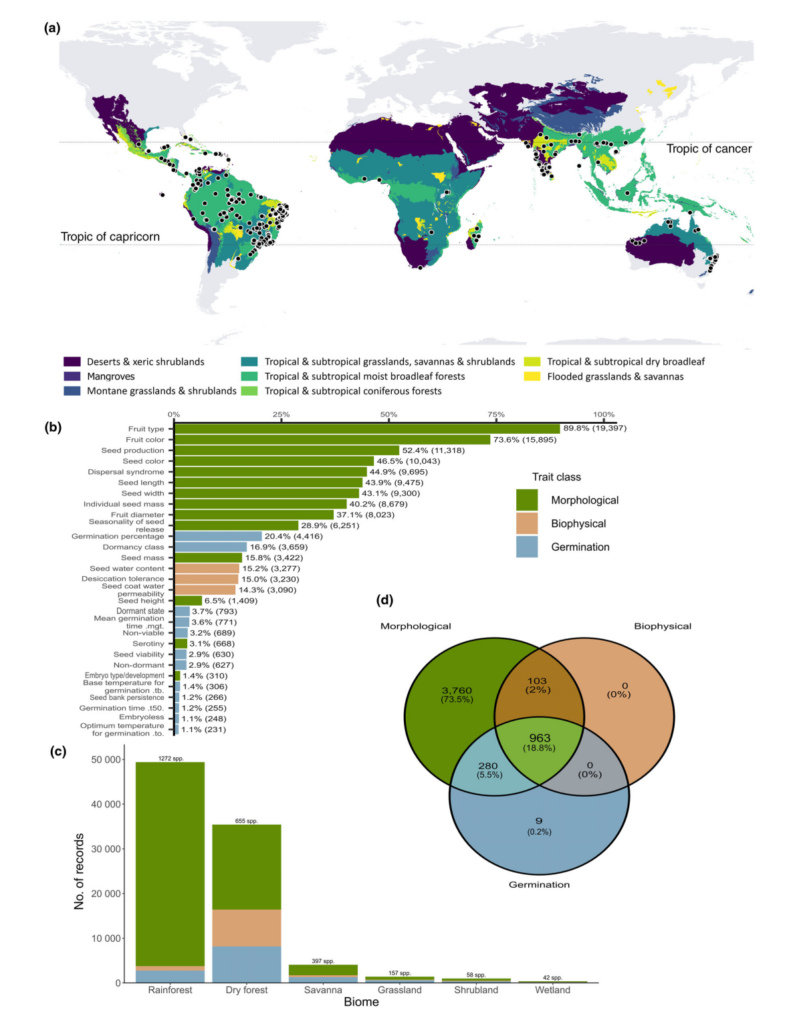
My own contribution consisted of morphometric measurements from numerous species, particularly from the insular Caribbean and Colombia. Behind every single data point lie journeys, long walks, field observations and countless hours of curiosity accumulated over many years.
There is something fascinating about science. Sometimes you think you are simply measuring a fruit and jotting down a few numbers in a notebook while taking a short break from the humid heat of a tropical forest. Then, years later, you discover that those observations have become part of a collective effort spanning the entire planet.
Perhaps that is one of the most beautiful aspects of research: a reminder that knowledge is rarely built through grand gestures. More often, it grows from small observations gathered patiently, driven by curiosity. And every now and then, with an old caliper tucked away in a pocket.

