From science communication to research on how we communicate about plants
To improve public awareness of plants, providing more botanical information may not be enough; we also need to explore how to spark curiosity, build emotional connections, and make their ecological relationships visible.
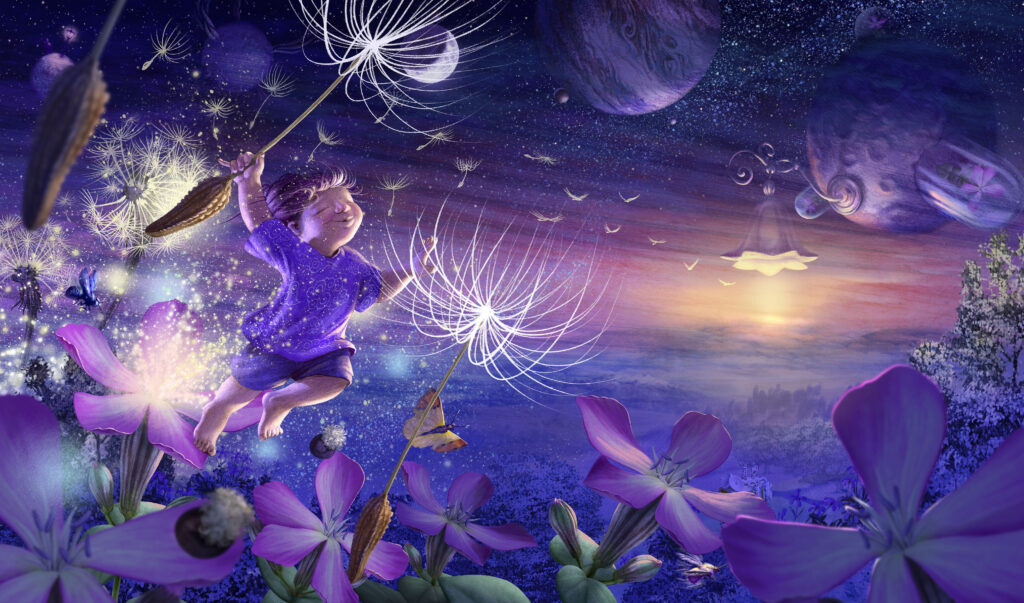
Scientific knowledge alone may not be enough to make plants more visible in people’s lives. Fostering emotional engagement may also be essential. This recently published article proposes a narrative and visual framework that combines scientific rigour, storytelling, and illustration to spark curiosity, empathy, and greater awareness of plants. Inspired by an illustrated story about a threatened plant species, the proposed framework encourages empirical evaluation of its effectiveness. (Illustration by Juan Hernaz https://juanhernaz.com).
This is certainly not my first scientific publication. But this one has a very special meaning for me, as it marks the beginning of a new line of academic research and publication in a field I have been working in for more than 18 years: science communication.
Throughout this time, much of my science communication work has focused on finding ways to communicate scientific research beyond academic circles. We have produced scientific animations, documentaries, exhibitions, comics, and illustrated children’s books. Each of these formats has confronted us with the same question: how can we make scientific knowledge understandable, interesting, and relevant to people who are not scientists?
And, above all, how can we do so without compromising scientific rigour?
With this new article, I wanted to take a further step: to bring some of the experience gained over these years into academic research, not to communicate a particular scientific finding, but to propose a framework that might help other researchers communicate their own findings more effectively.
The article focuses on a problem that is particularly relevant to those of us who study plants: plant awareness disparity, traditionally known as plant blindness. Plants are fundamental components of ecosystems, yet they often go unnoticed, even when they are all around us. And what we barely notice is unlikely to capture our interest.
The proposal builds on a relatively simple idea: to improve public awareness of plants, providing more botanical information may not be enough; we also need to explore how to spark curiosity, build emotional connections, and make their ecological relationships visible.
To this end, I propose a conceptual framework that combines storytelling, illustration, and scientific knowledge, using one of our illustrated children’s books, The Rockbreaker and the Biologist Family (Rompepiedras y la Familia Bióloga), as an example. The aim is not to replace scientific explanations with stories, but to explore how stories might help those explanations reach more people and become meaningful to them.
I want to emphasise something important: the framework I propose has not yet been empirically validated. And this is precisely where one of its most interesting possibilities lies. I would be delighted if other researchers, particularly those working in botanical education, plant perception, or science communication, were to use it, put it to the test, identify its limitations, and, if it proves useful, help improve it.
The manuscript review process has been particularly rewarding. The comments from reviewers and editors encouraged me to engage more deeply with scientific literature on botanical education, perception, narrative, and communication, considerably broadening my perspective. This experience has reinforced my appreciation of peer review when it functions as a genuine intellectual exchange.
I believe we are living at a time when making rigorous science visible to society is just as necessary as producing it. Not because science communication should replace research, but because knowledge generated through the scientific method needs to find ways of reaching society, particularly when we are dealing with environmental issues surrounded by so many claims that lack sufficient scientific evidence.
I hope this article will make a small contribution in that direction: offering other scientists some tools developed through many years of science communication experience, while also opening them up to scientific scrutiny and evaluation.
The article will be published shortly in Annals of Botany. For now, it has been accepted and can be cited as in press.
And yes, I am particularly pleased about this publication. Not so much because it adds another paper to my CV, but because it offers an opportunity to bring together, in a new way, two activities to which I have devoted much of my professional life: studying plants and finding ways to help people discover, understand, and pay attention to them.